
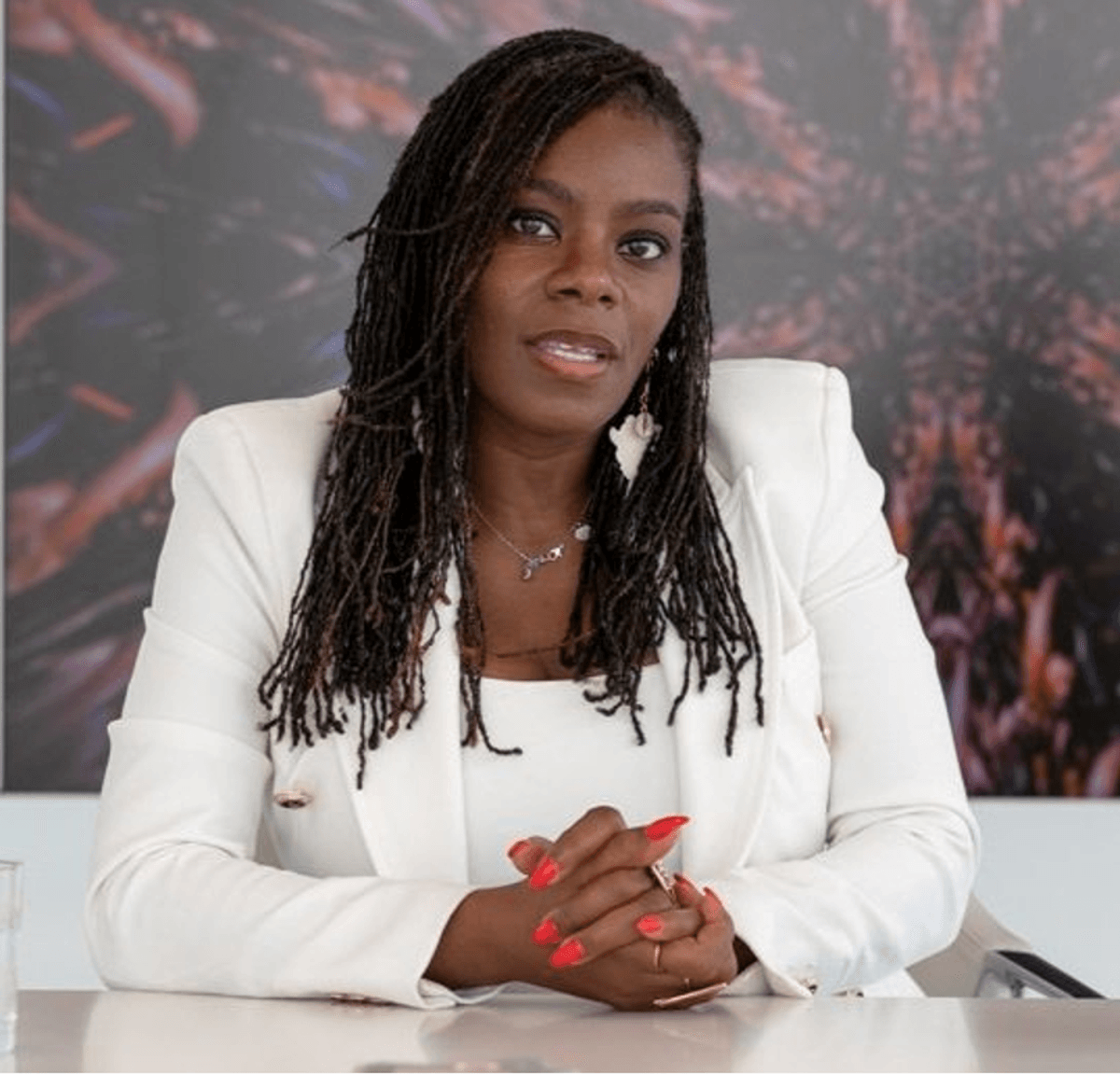
From AI governance to human leadership: Why Africa’s greatest AI investment is its people
...Governance creates direction. Infrastructure creates capability. But people create transformation
Paulette Watson MBE
This week, in Geneva, the United Nations is convening the first Global Dialogue on AI Governance, bringing all 193 Member States together for the first time to discuss how artificial intelligence should be governed, for whose benefit, and on what terms.

Published by Christabel Danso
4 views
Topics in this article
Paulette WatsonArtificial Intelligence
Related Coverage: Features
Features
Comms and branding with Samuel OWUSU-ADUOMI: The new world map presents an opportunity to redefine Africa’s place in the world (part 2)
The recent international movement toward maps that show Africa at its true relative size has corrected an important visual distortion.

Features
PR CORNER with Prosper Delali AYAYEE: The PR professional as a researcher — Turning information into intelligence
Public relations has often been described as the art and science of managing communication and relationships between an organisation and its publics. However, behind every successful communication strategy is something that we sometimes underestimate; research.

Features
ESG insights with Chamber of ESG & Sustainability with Frank Adu Anim: The SDGs and the law
Sustainable development law rests on important principles that have developed through international environmental law, treaties, judicial decisions and national legal systems.

Features
How to spot Misinformation and Disinformation
In today’s digital age, misinformation (unintentionally false information) and disinformation (deliberately deceptive content) are widespread, especially during elections and significant public events.

Features
Motoring with Bob Roco ROMEO: I used to think EVs in the country were for "The rich people trying to form"
Then I entered the space. That was about a year and a half ago. What started as a consulting engagement quickly became a conviction.

Features
The Citizen Experience Corner with Dr Julius Debrah and Professor Robert E. Hinson: Design government around citizen journeys, not institutional boundaries
Imagine a small business owner, Emmanuel, who wants to register a company and obtain the authorisations required to begin trading.

Features
West Africa – A new frontier for crystal meth production?
The densely forested interior and vast coastlines of West Africa have emerged as a primary global frontier in the production and movement of methamphetamine.

Features
From Paperwork to Possibility: What the Accra Convention on Negotiable Cargo documents means for exporters and importers
A new UN treaty opens for signature in Accra on October 26th, 2026. It could change how goods in transit are documented, sold and financed, and it holds a particular opportunity for Ghanaian exporters and importers.
Comment guidelines
Please keep comments respectful. Use plain English for our global readership and avoid using phrasing that could be misinterpreted as offensive. By commenting, you agree to abide by our community guidelines and these terms and conditions. We encourage you to report inappropriate comments.
An insightful article. I particularly agree that governance and infrastructure alone will not deliver AI transformation. The real differentiator is people. From my experience working with organizations in Ghana, many have begun their AI journey with awareness or training, but relatively few have progressed to sustained adoption in everyday workflows. The next challenge is helping leaders create environments where employees can confidently apply AI responsibly to improve decision-making, productivity, and service delivery. AI literacy should therefore be viewed not as a one-time training event, but as an ongoing organizational capability. Governance provides direction, infrastructure provides the tools, but it is people—supported by effective leadership—who ultimately translate AI into measurable business value. A timely contribution to an important conversation for Africa.