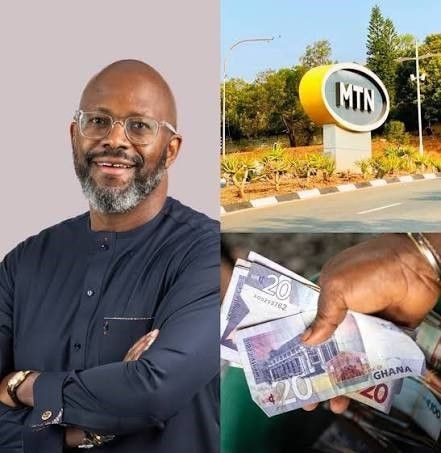
MTN's banking licence bid (1)
In February 2026, MTN Group President and CEO Ralph Mupita confirmed what the market had long speculated: MTN Ghana is in active discussions with the Bank of Ghana (BoG) for a digital banking licence.
Ghana's Micro, Small and Medium Enterprises (MSMEs) account for over 90% of all businesses in the country, contribute about 70% of GDP, and absorb 80% of the workforce, making them the backbone of the national economy. Yet a sobering reality persists: more than 90% of these enterprises are micro-sized, the overall MSME failure rate stands at 50%, and only 20% of start-ups survive. Behind these figures lies a long-overlooked bottleneck: severe underinvestment in human capital.
The 2025 numbers challenge one of Africa’s most persistent economic misconceptions. Global public debt stood at almost 94% of GDP: Japan’s exceeded 200%, the United Kingdom’s was above 100%, Singapore carried exceptionally high gross debt while remaining a major creditor with vast public assets, and South Africa remained close to 78%. Yet debt distress is profoundly unequal. The difference is not simply how much a country borrows, but the currency, cost, maturity and credibility of that debt, and whether borrowing expands tomorrow’s ability to repay.
Governments occasionally have to clarify themselves. Ministers misspeak. Journalists misunderstand technical explanations. Social media strips statements of context. None of this is unusual. But when clarification starts becoming a recurring feature of government, we should ask a different question: is the problem still communication, or has it become one of coordination?
Boosting trade flows amongst African countries remains a key economic priority.
The Chief Justice's praise for SSNIT and MIIF, and his pointed question about "what we have been doing in the past eight years," was defensible as opinion but costly as precedent. Measured against his own predecessors and against chief justices in Washington, London, Ottawa and Canberra, the episode exposes a structural gap in Ghana's constitutional design: robust guarantees of institutional independence, but no settled convention on what a sitting Chief Justice should and should not say in public.
The Chief Justice's praise for SSNIT and MIIF, and his pointed question about "what we have been doing in the past eight years," was defensible as opinion but costly as precedent.
Get the latest features news delivered to your inbox.